
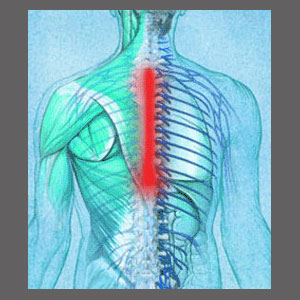
Thoracic spinal stenosis is the least common location for a narrowed spinal canal to exist in the human vertebral column. The middle back, also known as the thoracic spine, is an area spared from most forms of common degeneration inherent to the upper and lower spinal regions. This is because the middle back does not have to bend and flex to the same degree as the cervical and lumbar spinal locales. Additionally, the thoracic region is designed for support and protection, making it less vulnerable to the same types of injury which are known to plague the neck and low back. However, it is certainly possible to demonstrate a narrowed thoracic canal, as well as mid back neuroforaminal stenosis.
This resource section provides a basic overview of upper and middle back spinal canal stenosis. We will look into the sources of thoracic stenosis, as well as the usual symptoms. We will conclude by covering the diagnostic process and the treatment options, both surgical and nonsurgical. All these topics will be further clarified in the informational essays contained below.
Thoracic Spinal Stenosis Essays
Here are some of the focused articles related to a narrowed central spinal canal or decreased foraminal spaces in the middle and upper back areas:
Thoracic foraminal stenosis is the least common type of neuroforaminal narrowing, since the contributing factors of arthritis and disc pathologies are rare in the middle and upper back areas.
Spinal stenosis in the upper back describes a decreased central canal space in the upper end of the thoracic spine, from the cervicothoracic juncture to the middle thoracic vertebrae.
Spinal stenosis in the middle back describes a narrowed central canal from the middle thoracic vertebrae to the thoracolumbar juncture.
Read more about the incidence of stenosis in the thoracic spine.

Thoracic Spinal Stenosis Facts
Being that thoracic canal stenosis is the least often seen, there are usually specific reasons for these issues to occur in particular patients not related to typical spinal degeneration.
Back injury is certainly possible as a source of canal stenosis, but the trauma would have to be quite massive to greatly affect the hearty middle back region. These types of injuries are usually enacted by car accidents and serious falls.
A congenitally narrowed spinal canal may exist in the thoracic spine, although this will still almost never lead to a symptomatic expression without other contributing factors.
Certain forms of kyphosis may cause or contribute to a narrowed central canal or decreased neuroforamen in the thoracic spine. These hyperkyphotic changes are usually seen in the elderly and are often associated with low bone density.

Thoracic Spinal Stenosis Overview
Spinal stenosis in the upper and mid back locations is usually either mild and due to a congenital issue or severe and related to a serious trauma or spinal disorder. In the minor cases, treatment is seldom needed, since symptoms rarely result. In these cases where back pain is present, the true causation will usually lie elsewhere. In the severe stenosis cases, treatment may be required and often ends up being surgical in nature.
The good news? Treatment statistics for thoracic stenosis are among the best, although this is not saying much, since overall, more chronic stenosis patients do not find complete and lasting relief, compared to those who do. Always seek qualified care from a specialist in spinal neurology to better your chances of successful diagnostic evaluation and treatment for any significant stenosis concern.
Spinal Stenosis > Thoracic Spinal Stenosis